
Is HVAC technician hard on the body? Yes, but not in the way most people picture it. The damage does not come from lifting all day like a warehouse job. It comes from heat, from awkward positions in spaces built for ductwork rather than humans, and from a handful of lifts per week that are genuinely too heavy for one person.
Ask this question online and you get two useless answers: trade school pages saying it is "physically active," and forum replies saying "my knees are shot." Here is the specific version, including what actually wears out first and what the techs still working at fifty-five do differently.
The short answer
HVAC is moderately hard on the body with two severe pressure points: heat exposure and equipment lifting. Everything else is comparable to other trades.
Most techs who leave for physical reasons leave because of their back or knees, and most of that damage was avoidable. Heat is the hazard most likely to hurt you badly in a single afternoon.
Heat is the defining hazard of this trade
Every trade has a signature hazard. For HVAC it is occupational heat stress, and it is the thing new techs consistently underestimate.
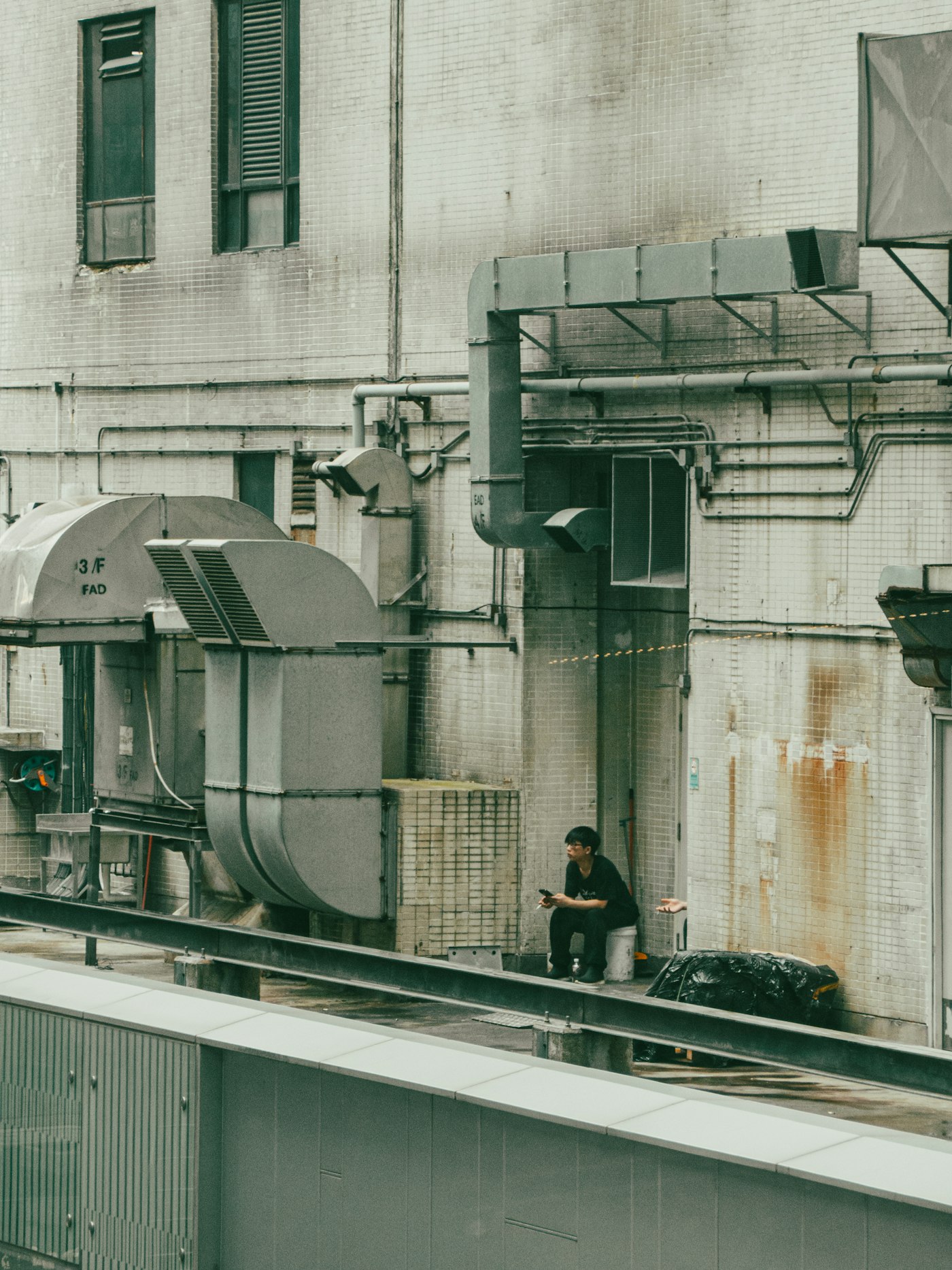
What an attic actually does to you
On a 95°F day, an unventilated attic can run 130°F to 150°F. You are up there in long sleeves, on your knees, on joists, in the dark, with a light on your head adding more heat to your face.
Your body has one cooling strategy and it is sweating. In that environment you can lose serious fluid in under an hour, and heat exhaustion arrives faster than people expect. The warning signs are worth memorizing: headache, nausea, dizziness, cramping, and the genuinely dangerous one, you stop sweating. If sweating stops in a hot attic, you are in trouble and you need to be out and cooling immediately.
This is not a rare edge case. Summer attic work is routine residential HVAC. Techs pass out in attics every year.
Rooftops are the other half
Commercial work trades attics for roofs. A black membrane roof in direct August sun radiates heat upward while the sun cooks you from above, with no shade for the whole service call. Add carrying a recovery machine and gauges up a ladder, and wind that makes every panel you remove a small fight.
Roofs also bring the fall risk, which is the hazard most likely to end a career instantly rather than gradually.
The lifting problem
HVAC equipment is heavy and it lives in places forklifts cannot reach.
- A residential condenser commonly runs 100 to 250 pounds depending on tonnage.
- Furnaces are awkward more than heavy, and they usually have to come out of a closet or up out of a crawlspace.
- Compressors are dense, unbalanced, and always in a bad spot.
- Commercial rooftop units go up by crane, but every component inside them comes out by hand.
The industry answer is that these are two-person lifts. The reality is that a tech running solo on a Saturday with a customer standing there watching will sometimes do it alone. That single decision, repeated a few dozen times over a career, is where a large share of HVAC back injuries come from.
The techs who avoid back problems are not stronger. They are the ones who called for help and accepted being slower.
What actually wears out first
Ask techs with twenty-plus years in and the same short list comes back.
Knees
Usually first. Furnace work is kneeling work. Attic work is kneeling and crawling on joists, which means kneeling on a two-inch edge rather than a floor. Crawlspaces are the same problem with less headroom.
Knee pads help enormously and cost almost nothing, and a meaningful number of techs still skip them because they are hot and they slide. That is a bad trade.
Shoulders and neck
Overhead work does this. Duct hanging, brazing a line set above your head, and reaching into the top of an air handler all load the shoulder in its weakest position. Brazing overhead is especially rough because you have to hold still and hold steady while doing it.
Neck strain compounds it. A lot of HVAC diagnosis happens looking up into a unit while your hands work by feel.
Back
The back takes damage from two directions: the heavy lifts described above, and the sustained bent-over positions that are not heavy at all but last twenty minutes. Both matter. Techs tend to respect the first and ignore the second.
Hands and wrists
Flaring, swaging, wrenching in spaces where you get a quarter turn at a time, and gripping tools with gloves on. It builds up slowly. Grip strength complaints are common by mid-career.
The injuries that actually happen most
Long-term wear gets the attention, but the day-to-day injury list looks different.
- Cuts from sheet metal. Easily the most common HVAC injury. Duct edges are effectively blades, and every tech has scars on their forearms. Gloves and sleeves matter.
- Burns. Brazing torches, hot compressor discharge lines, and heat exchangers that were running ten minutes ago.
- Refrigerant frostbite. Liquid refrigerant hitting bare skin causes an immediate freeze burn. Safety glasses matter here more than anywhere else on the job, because eyes are the real risk.
- Electrical shock. HVAC is an electrical trade too. Capacitors hold a charge after the power is off, and discharging them properly is a habit you build early or learn the hard way.
- Confined space and displacement. Refrigerant is heavier than air and displaces oxygen in a basement or a pit. Rare, but serious.
How it compares to being an electrician
People weighing these two trades usually want this comparison directly, and we went through the full side by side in HVAC vs electrician.
On the body specifically: electrical work is more evenly repetitive, with lots of overhead reaching, conduit bending, and wire pulling spread across the year. It wears you down steadily. See is being an electrician hard on your body for that breakdown.
HVAC is spikier. Shoulder seasons are genuinely easy. Then July arrives and you are doing attic changeouts in 140°F for nine weeks straight. The annual average looks similar; the peaks are much worse in HVAC.
What the techs who last 25 years do differently
This is the useful part, because none of it is complicated.
- They schedule attic work for early morning. A 7 a.m. attic and a 2 p.m. attic are different jobs entirely. Good techs push attic calls to the front of the day whenever dispatch allows.
- They hydrate before, not during. Once you are behind on fluids in an attic you cannot catch up until you come out.
- They wear knee pads every day. Not just when they expect to kneel.
- They wait for the second person on heavy lifts. Every time. This is the single highest-value habit on the list.
- They use the lift equipment that already exists. Appliance dollies, straps, and ramps are on the truck for a reason.
- They come out of the heat before they feel bad, not when they start to.
- They move to commercial or controls in their forties. Which brings us to the last point.
The exit ramps are real
The reason HVAC is a defensible career choice despite the physical cost is that the trade has genuine off-ramps that keep your income and drop the wear.
Building automation and controls is the big one. It is indoor, technical, well paid, and mostly laptop and low-voltage work. A lot of HVAC techs make this move around forty and never look back.
Beyond that: commercial and institutional maintenance is far gentler than residential service, and it usually comes with steadier hours, which we covered in how many hours HVAC techs work. Service management, estimating, and manufacturer rep roles all get you off the tools while your field experience is still the reason you are valuable.
The honest answer
Is HVAC technician hard on the body? Harder than an office job by a wide margin, comparable to other skilled trades, and with one hazard — heat — that is worse than most trades and deserves genuine respect.
But the damage is not evenly distributed across techs. It concentrates in the ones who lift alone, skip knee pads, and push through attic heat to finish a call. The ones who build a few unglamorous habits early tend to reach their fifties in decent shape, and by then most of them are not in attics anymore anyway.
If you are physically capable now and willing to be deliberate about how you work, this trade will not break you. If you plan to be a hero about it, it will.


