
HVAC vs electrician is the choice a lot of people land on once they decide college is not the plan. Both are licensed trades, both pay without a degree, and both will take you as an adult with no experience. But they are not interchangeable, and the differences that actually matter are not the ones most articles talk about.
Search this comparison and you mostly get trade school landing pages, which have an obvious reason to tell you both options are excellent. Here is the version that accounts for how each trade actually pays, how hard each one is to get into, and what your body and calendar look like in year ten.
The short answer
Boiled down, HVAC vs electrician comes to this: HVAC is faster to enter and faster to reach full pay. Electrical takes longer to enter, pays less during training, and has a higher ceiling and a steadier calendar afterward.
If you need real money inside twelve months, HVAC wins. If you can survive four or five lean years, electrical usually wins over a career. Everything below is the detail behind that trade-off.
Getting in: HVAC is faster, electrical is more competitive
This is the single biggest practical difference, and it is where most people actually make the decision.

What HVAC entry looks like
The common HVAC path is a six to twelve month trade school program, or getting hired as a helper and learning on the truck. Residential service companies hire helpers constantly, especially heading into summer. Many will train you.
The one non-negotiable credential is EPA Section 608 certification. Federal law requires it before you can buy or handle refrigerant, which is most of the job. It comes in four flavors:
- Type I — small appliances
- Type II — high-pressure systems, which covers most residential and commercial air conditioning
- Type III — low-pressure systems, mainly large chillers
- Universal — all three
You pass a core exam plus the type exams. It is an open-book test in many testing centers, it costs well under $200 in most places, and it does not expire. Get Universal if you have the option, because it costs almost nothing extra and it stops closing doors later.
State licensing on top of that varies enormously. Some states require a contractor or journeyman HVAC license with documented hours; some have no statewide requirement at all and leave it to counties. Check your own state before you plan around anyone else's timeline.
What electrical entry looks like
Electrical is a four to five year apprenticeship, and the good ones are genuinely competitive. A union apprenticeship involves an aptitude test, an interview, and a ranked list you may sit on for months. We covered exactly how that process works in how hard it is to get an IBEW apprenticeship.
The upside is that once you are in, the training is paid, structured, and comes with classroom hours built in. You are not paying tuition and hoping a company hires you afterward.
The honest gap: a motivated person can be earning real HVAC money in under a year. That same person is still an apprentice earning a percentage of scale three years into electrical.
Pay: the two trades make money in completely different ways
Comparing average salaries between these trades is close to useless, because the pay mechanisms are not the same shape. This is the part almost nobody explains.
Electricians earn on a published scale
Union electrical pay is a percentage of the local journeyman rate that steps up on a fixed schedule. You can look up your local's scale and calculate your earnings four years out with real accuracy. We broke that math down in electrician apprenticeship pay by year.
The trade-off is that the scale is also a ceiling. You do not out-earn the scale by hustling; you out-earn it with overtime, or by moving up the ladder.
HVAC techs often earn base plus commission
Here is the piece that surprises people. In residential HVAC service, a large share of companies pay a modest hourly base plus commission or spiff on equipment sales. Sell a system replacement, get a cut. Sell an add-on, get a smaller cut.
That structure has real consequences:
- Top residential service techs can out-earn journeyman electricians in the same city, sometimes by a lot.
- Techs who are uncomfortable selling can sit well below the local average indefinitely, in the same seat, doing competent work.
- Your income swings with the season and with what walks through the door.
- There is real pressure to recommend replacement over repair, and how you feel about that is a legitimate factor in this decision.
Commercial and industrial HVAC generally drops the commission model and pays straight hourly or salary, which is steadier but flatter.
So who actually makes more?
Over a full career and across the median, electrical tends to come out ahead, mostly because of the licensed ceiling and the steadier hour count. But the distribution in HVAC is much wider. The top of residential HVAC beats the middle of electrical comfortably.
Rather than trusting any national average, do this: look up your local IBEW journeyman scale, then search current HVAC service tech listings in your metro and note which ones say "plus commission." That comparison is worth more than any figure in an article, including this one.
HVAC vs electrician: which one is harder?
Two different questions live inside this, and they have different answers.
Harder to learn
Electrical. The code alone is a serious body of knowledge, the math is constant, and the consequences of getting it wrong are immediate. Electrical theory rewards people who like systems and rules.
HVAC has its own hard parts that people underestimate, though. The refrigeration cycle is genuinely conceptual, and diagnosing a system by pressures and temperatures is a real skill. HVAC also demands a wider range: you need electrical competence, plus refrigeration, plus airflow, plus combustion on the heating side, plus increasingly controls and networked thermostats. It is broader; electrical is deeper.
Harder on the body
Different, not obviously worse. Electrical work is repetitive overhead reaching, bending pipe, kneeling, and hauling wire, which we covered in is being an electrician hard on your body.
HVAC concentrates its punishment differently: attics in July, rooftops in August, crawlspaces in general, and lifting equipment that weighs more than you do. Heat exposure is the defining HVAC hazard and it is not a small one. We went through it in detail in is HVAC technician hard on the body.
Rough summary: electrical grinds you down slowly and evenly. HVAC hits you hard in specific seasons and lets up in between.
Schedule and on-call
This is an underrated deciding factor, and it favors electrical for most people.
Residential HVAC service runs an on-call rotation. When a heat wave hits, everybody works, and no-heat calls in January do not wait for morning. Summer and deep winter mean long weeks; spring and fall can go quiet enough that hours get cut. We covered the real numbers in how many hours HVAC techs work.
Electrical construction work is more predictable week to week. It has its own instability, but it is project-driven rather than weather-driven, and outside of industrial maintenance roles, most electricians are not carrying a phone on nights and weekends.
Where each career actually ends up
Look at where the trade leads, not just where it starts.
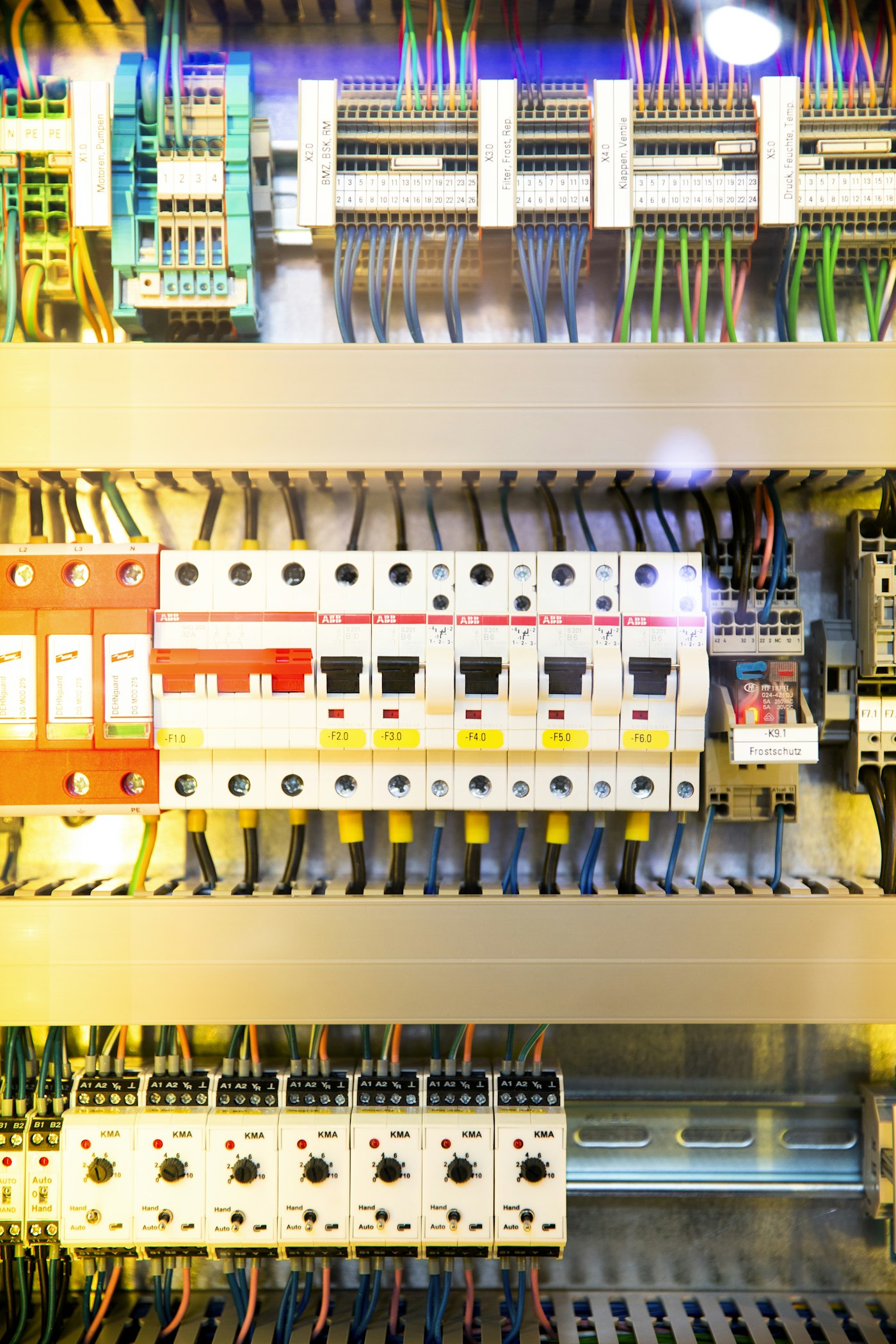
Electrical: journeyman, then master electrician, then contractor with your own license. Along the way there are high-paying specializations in industrial controls, PLC work, and instrumentation. The licensed ceiling is high and the license itself is a durable asset.
HVAC: service tech, then lead tech or commercial refrigeration, then the two genuinely lucrative exits — building automation and controls, and owning a service company. Controls and BAS work is the quiet best-kept secret of this trade: indoor, technical, well paid, and much easier on the body at forty-five than crawling through attics.
Both trades also feed into estimating, project management, and manufacturer rep work if you want off the tools eventually.
Job security and seasonality
HVAC is close to recession-resistant in a way electrical construction is not. When the economy slows, new construction stops, and construction electricians feel it. But air conditioning still breaks in July regardless of interest rates, and heat still fails in January.
The flip side is that HVAC demand is seasonal within the year. Electrical is steadier month to month but more exposed to the broader construction cycle. Pick your instability.
How to actually choose
Skip the personality quizzes. Answer these instead.
- Can you afford four lean years? If no, HVAC. This dominates almost every other factor.
- Are you willing to sell? If yes, residential HVAC has a higher upside than most people realize. If the idea makes you uncomfortable, either go commercial HVAC or go electrical.
- Do you want your evenings and weekends? Electrical, or commercial and institutional HVAC. Not residential HVAC service.
- Do you handle heat badly? Take attic and roof work seriously before committing to HVAC. This is a real disqualifier for some people and there is no shame in it.
- Do you want to own a business someday? Both work, but HVAC service companies are easier to start small and scale on recurring maintenance contracts.
- Is there a strong union local near you? If yes, that tilts the answer toward electrical for reasons we covered in union vs non-union electrician.
The honest summary
There is no wrong answer in HVAC vs electrician, which is genuinely why the comparison is hard. Both trades are in demand, both pay a real living, and both are far better bets than a lot of degrees people take on debt for.
If you are young, patient, and there is a decent apprenticeship within driving distance, electrical is the stronger long game. If you need income now, you do not mind heat, and you are not allergic to the sales side, HVAC gets you there faster and can pay more than people expect.
The worst outcome is spending two years deciding. Both trades hire year-round. Pick one, get the first credential, and adjust from inside the industry with real information instead of from outside with articles.


