
United Airlines Flight UA770 Emergency Diversion: What Happened?
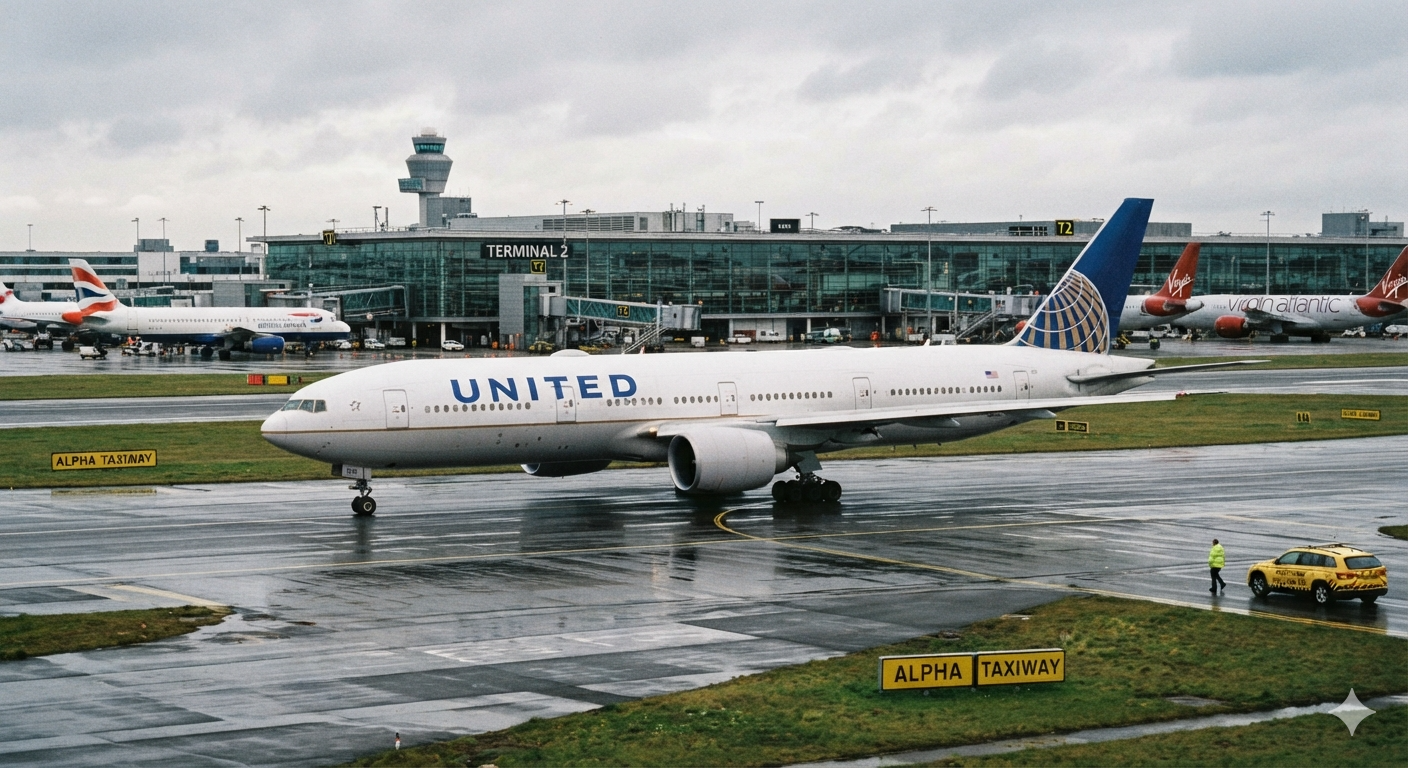
The United Airlines Flight UA770 emergency diversion began during a scheduled trip from Barcelona, Spain, to Chicago on May 27, 2025. Instead of continuing across the Atlantic, the aircraft declared an emergency and diverted to London Heathrow Airport.
The plane landed successfully, but the reason for the diversion was not publicly confirmed. That distinction matters because numerous online accounts have presented unsupported explanations—including a cabin pressurization problem—as established fact.
Here is what travelers can reasonably confirm, what remains unknown, and how an emergency diversion works.
United Airlines Flight UA770 Emergency Diversion: Confirmed Facts
UA770 was operating from Barcelona–El Prat Airport (BCN) to Chicago O’Hare International Airport (ORD). Approximately 90 minutes after departure, the crew selected transponder code 7700 and changed course for
London.
A contemporaneous AIRLIVE report (https://airlive.net/emergency/2025/05/27/united-flight-ua770-to-chicago-is-declaring-an-emergency-and-diverting-to-london/) said United confirmed the diversion. The aircraft
subsequently landed on Heathrow’s Runway 27R and taxied to Gate B44.
Detail Confirmed information
The incident occurred on May 27, 2025, while United Airlines Flight UA770 was scheduled to travel from Barcelona to Chicago. The aircraft diverted to London Heathrow Airport after transmitting emergency code 7700. The plane involved was a Boeing 787-8 registered as N26902. The specific cause of the emergency has not been publicly disclosed.
Publicly confirmed cause Not disclosed
Early reports described N26902 as a Boeing 787-9. However, an FAA aircraft approval record (https://www.faa.gov/sites/faa.gov/files/2025-02/NAARMO_US_Commercial_RVSM_Approvals_Part_121_Section_3_0.pdf) identifies the registration as type B788, meaning Boeing 787-8.
No publicly available statement located for this review confirms passenger numbers, a loss of cabin pressure, oxygen-mask deployment, or a specific mechanical failure.
What Did Squawk 7700 Mean on UA770?
“Squawk” refers to the numerical code transmitted by an aircraft’s transponder. Code 7700 alerts controllers to a general emergency or urgent situation.
The FAA Aeronautical Information Manual (https://www.faa.gov/air_traffic/publications/atpubs/aim_html/chap6_section_2.html) explains that 7700 normally activates an alarm or special indicator at air traffic control positions. It tells ATC that the aircraft needs immediate attention, but it does not reveal the problem.
Pilots may use the code for many situations, including:
- A technical warning
- Smoke or an unusual odor
- A medical emergency
- A security concern
- Another condition requiring priority handling
Therefore, UA770’s use of 7700 confirms that the crew treated the situation seriously. It does not confirm the cause.
How Air Traffic Control Supports a Diversion
Once an emergency is declared, Air Traffic Control can give the aircraft priority, coordinate a suitable route, and notify the destination airport. Controllers may also provide weather, runway, and traffic information while keeping other aircraft clear.
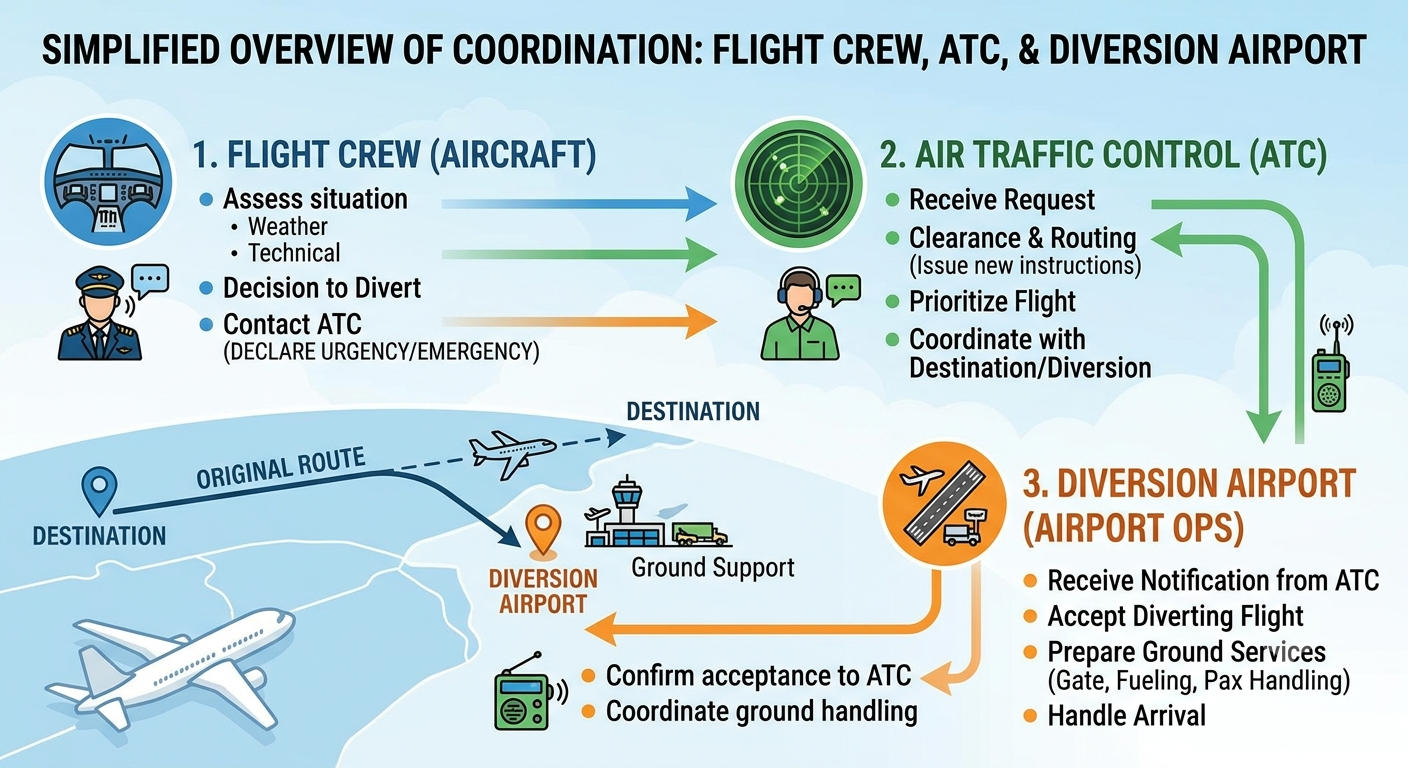
The pilots remain responsible for choosing the safest course of action. Their decision considers the aircraft’s condition, fuel, weather, airport facilities, runway availability, and access to maintenance or medical support.
Was This an Emergency Landing or a Precautionary Landing?
The phrases are often used interchangeably, but they describe different aspects of an event.
An emergency diversion is a change from the planned destination because continuing the original flight is no longer considered appropriate. A precautionary landing may occur before a warning develops into a more serious problem.
UA770 declared an emergency, received priority handling, and landed at an alternate airport. That does not necessarily mean the aircraft was in immediate danger. Diversion decisions are an important part of
aviation safety because they move an uncertain situation from the air to a controlled environment on the ground.
What Should Passengers Do After a Diversion?
Passengers affected by a United Airlines emergency landing or diversion should:
1. Follow crew instructions and keep aisles clear.
2. Check the United app, text messages, and email for rebooking updates.
3. Photograph boarding passes and save meal, hotel, and transportation receipts.
4. Ask whether checked baggage will remain on the aircraft.
5. Request written confirmation of the disruption before filing a claim.
Because UA770 departed from Spain, applicable EU air-passenger protections (https://europa.eu/youreurope/citizens/travel/passenger-rights/air/index_en.htm) may cover assistance and, depending on the final delay and its cause, compensation. A diversion alone does not automatically qualify every passenger for a cash payment.
Frequently Asked Questions
1. Why did United Airlines Flight UA770 divert?
The specific cause was not publicly confirmed in the reliable sources reviewed. Claims of a pressurization failure should be treated as unverified.
2. Did UA770 crash?
No. The aircraft landed at London Heathrow and taxied to a gate.
3. Does squawk 7700 always mean mechanical failure?
No. It is a general emergency code and can be used for technical, medical, security, or other urgent situations.
Conclusion
The United Airlines Flight UA770 emergency diversion shows why aviation reports must distinguish evidence from assumption. The confirmed record is straightforward: UA770 left Barcelona for Chicago, transmitted emergency code 7700, diverted to Heathrow, and landed successfully. The cause remains publicly unconfirmed, so more detailed explanations should not be presented as fact.