
Cyclospora Outbreak 2026: Symptoms, Affected Areas and Food Safety
Reports of cyclosporiasis are rising in parts of the United States, prompting investigations by federal and state health officials. The Cyclospora outbreak 2026 has been especially significant in Michigan, but infections and smaller clusters are being monitored elsewhere.
For consumers, the most important facts are straightforward: Cyclospora can cause prolonged diarrhea, the source of the current illnesses has not been conclusively identified, and anyone with persistent symptoms should contact a healthcare professional.
This article was updated July 14, 2026. Case numbers and investigations can change quickly.
What is happening in the Cyclospora outbreak 2026?
Cyclospora cayetanensis is a microscopic parasite that infects the small intestine. People can develop cyclosporiasis after consuming food or water contaminated with the parasite.
The Michigan Department of Health and Human Services reported 784 cases connected to a significant increase in southeastern Michigan as of July 7. Concentrated areas included Monroe, Lenawee, Washtenaw, Wayne and several neighboring counties.
Federal officials are also examining separate clusters. The FDA’s active outbreak investigation list (https://www.fda.gov/food/outbreaks-foodborne-illness/investigations-foodborne-illness-outbreaks) identifies Cyclospora investigations involving products that have not yet been determined.
These figures should not automatically be combined into one national total. State reporting schedules vary, and investigators have not established that every reported illness belongs to a single outbreak.
What are the most common cyclosporiasis symptoms?
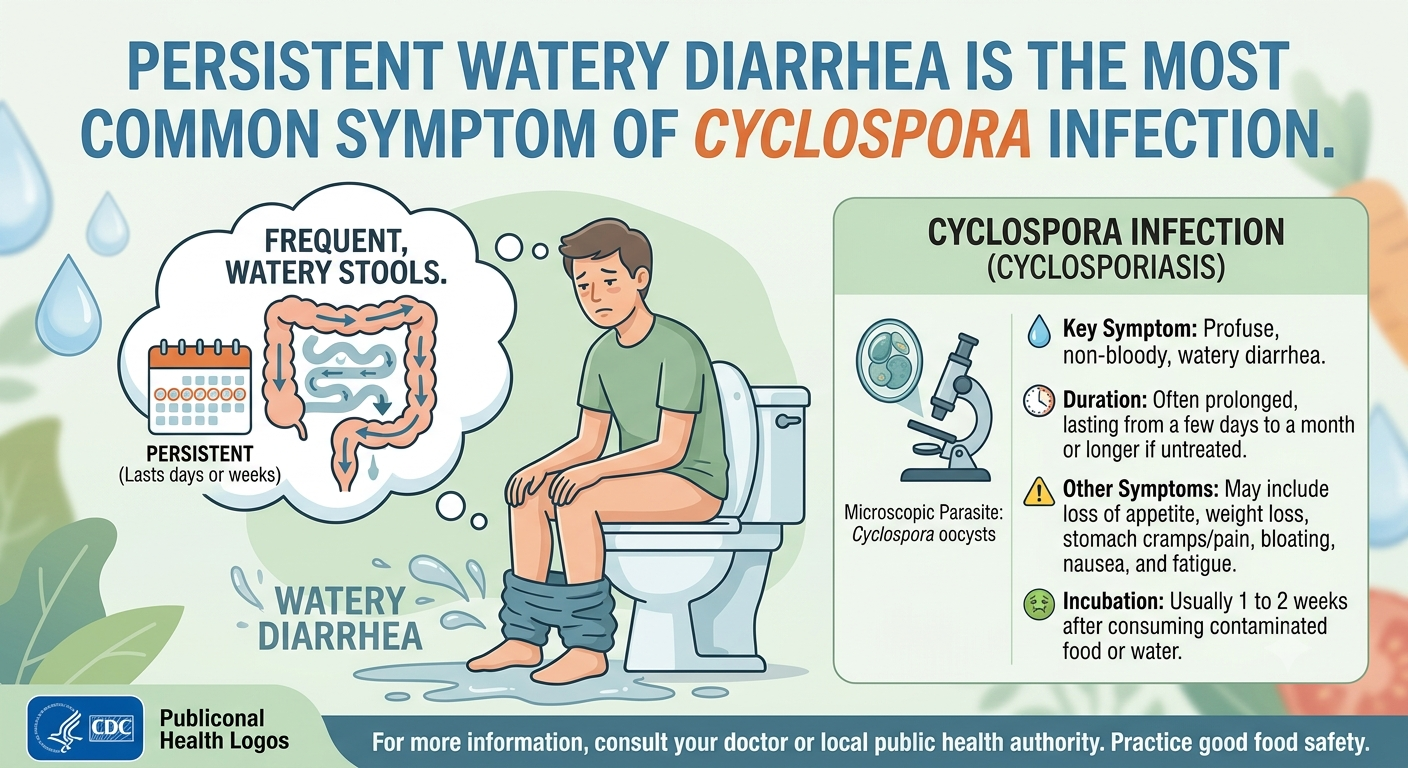
The most recognizable symptom is frequent watery diarrhea. According to the CDC’s cyclosporiasis guidance (https://www.cdc.gov/cyclosporiasis/about/index.html), symptoms usually begin about one week after exposure, although they may appear anywhere from two days to two weeks or longer.
Other cyclosporiasis symptoms can include:
- Loss of appetite and unintended weight loss
- Stomach cramps, bloating or increased gas
- Nausea
- Fatigue
- Low-grade fever
- Occasional vomiting or body aches
Without treatment, symptoms can continue for a month or longer. They may disappear temporarily and then return.
When should you contact a healthcare provider?
Seek medical advice if you have persistent or severe diarrhea, signs of dehydration, or symptoms that improve and then return. People with weakened immune systems may face a greater risk of prolonged illness.
Diagnosis requires testing a stool sample. Routine stool tests may not include Cyclospora, so the CDC advises healthcare providers to request a test for the parasite specifically. More than one sample may sometimes be necessary.
Doctors commonly treat confirmed cyclosporiasis with a prescription antibiotic called trimethoprim-sulfamethoxazole. Patients should not attempt to diagnose or treat the infection themselves.
Which states are affected?
The Cyclospora outbreak affected states and case counts may change as local health departments process reports. Michigan is currently a major reported hotspot, particularly in the southeastern part of the state.
Consumers should consult their state or county health department for the most current local numbers. Be cautious with maps or lists that combine undated reports, suspected illnesses and laboratory-confirmed cases.
Cyclosporiasis is nationally notifiable, meaning confirmed cases are generally reported to public health authorities. However, official national figures can lag behind state announcements.
Which Cyclospora foods are under investigation?
No specific product, grower or supplier has been conclusively identified as the source of the large Michigan outbreak. The FDA also lists the products in its active federal Cyclospora investigations as “not yet identified.”
Previous U.S. outbreaks have been associated with fresh produce such as basil, cilantro, raspberries, snow peas and salad mixes. That history does not mean any of those foods caused the current illnesses.
Avoid social-media posts claiming that a particular restaurant, grocery chain or food is responsible unless the FDA, CDC or another public health agency confirms it.
How to reduce your risk
The CDC recommends (https://www.cdc.gov/cyclosporiasis/prevention/index.html) these everyday food-safety practices:
1. Wash your hands before and after preparing fresh produce.
2. Rinse fruits and vegetables thoroughly under running water.
3. Scrub firm produce, including melons and cucumbers, with a clean brush.
4. Remove damaged or bruised areas before eating.
5. Refrigerate cut, peeled or cooked produce within two hours.
Washing produce can reduce contamination, but it may not remove every Cyclospora organism. Produce labeled “prewashed” does not need to be washed again at home.
Cyclospora is unlikely to spread directly from one person to another. After leaving the body, the parasite generally needs time in the environment before it becomes infectious.
Frequently asked questions
1. Is Cyclospora the same as a stomach virus?
No. Cyclospora is a parasite, while common stomach viruses are caused by viruses. Their symptoms can overlap, so laboratory testing may be needed.
2. Is there a Cyclospora recall?
As of July 14, authorities have not announced a broad food recall tied to the major current increase in cases. Check the FDA’s outbreak page for updates.
Conclusion
The Cyclospora outbreak 2026 remains under investigation, and no single food source has been confirmed. Monitor official updates, follow safe produce-handling practices and contact a healthcare provider if persistent watery diarrhea develops.