
There are two Ocean Cities on the East Coast, they are about 100 miles apart, and they are almost opposites. One has been dry since 1909 and its tallest structure is a Ferris wheel that no longer turns. The other draws eight million visitors a year, has high-rise hotels along the beach, and a nightlife scene to match.
Picking the wrong one is a genuinely common mistake. Here is how they actually differ.
Quick comparison
Ocean City, NJ
Alcohol: dry town — no bars, no liquor stores, no alcohol in restaurants
Size: smaller, low-rise
Beach access: beach tags required, around $35 for the season
Boardwalk: 2.5 miles, 8 blocks of amusements
Tallest structure: a Ferris wheel (closed since 2024)
Crowd: families, multi-generational
Best for: young kids and quiet evenings
Ocean City, MD
Alcohol: fully licensed bars and restaurants
Size: about 3× the size, high-rise beachfront
Beach access: free
Boardwalk: around 3 miles, larger amusement scene
Annual visitors: roughly 8 million
Crowd: families, college students, party groups
Best for: teens, groups, nightlife, bigger rides
The single biggest difference: Ocean City NJ is dry
This decides the trip for most people, and it surprises visitors who did not research it.
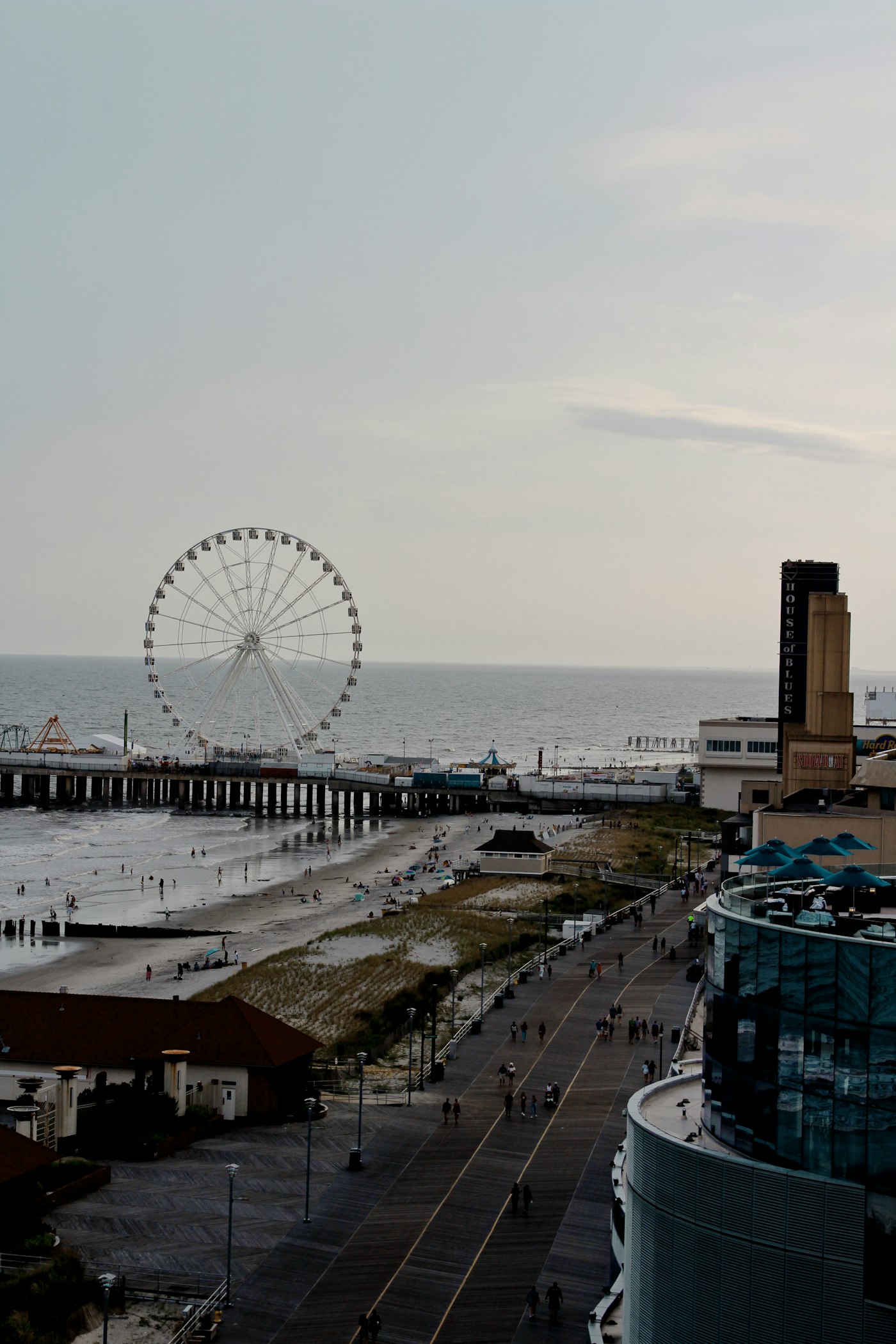
Ocean City, New Jersey has banned alcohol production and sales since 1909 — a decade before national Prohibition. The town was founded by Methodist ministers who intended it as a Christian seaside resort, and the rule never went away. There are no bars, no clubs, no liquor stores, and restaurants do not serve alcohol.
One nuance most comparisons miss: you can bring your own. If you are staying in a rental house or a motel room, you may bring beer, wine or spirits for consumption inside your accommodation. What you cannot do is buy it in town, or drink it on the beach, boardwalk, or any public space.
Ocean City, Maryland is the reverse — alcohol is sold and served throughout the resort by licensed businesses. Worth knowing, though: Maryland also bans alcohol on the beach and boardwalk. The difference is in the restaurants and bars, not on the sand.
Scale and atmosphere
Ocean City, Maryland is roughly three times the size of its New Jersey namesake and hosts around eight million visitors a year. The beachfront is lined with high-rise condominiums and hotels, and the amusement scene is genuinely large — mini-golf, arcades, and some of the better roller coasters on the East Coast.
Ocean City, New Jersey keeps its skyline low. The tallest thing in town is still the Ferris wheel at Gillian's Wonderland Pier, though the park itself closed for good on October 13, 2024 after 94 seasons, and the wheel has not run since. The site's future is still unsettled. The boardwalk runs 2.5 miles with eight solid blocks of family amusements between 6th and 14th Streets, and the pace is noticeably slower.
Neither is quiet in July. But the difference in the evening is stark: Ocean City NJ winds down, and Ocean City MD does not.
Cost: the beach itself
Ocean City, New Jersey charges beach tags — around $35 for a season pass, or $30 with the preseason discount. That revenue funds beach cleaning and maintenance, and the beaches are noticeably well kept.
Ocean City, Maryland beaches are free and very wide. The tradeoff is volume: peak-season crowds are far larger, and with alcohol available in town, the beach and boardwalk can feel rowdier by evening.
New Jersey has free options too, if paying for sand is the sticking point — several shore towns require no tags at all, which we covered in our guide to free beaches in New Jersey.
Which one should you pick?
Choose Ocean City, NJ if
You are travelling with young children
You want calm evenings and an early night
A dry town sounds like a feature, not a restriction
You prefer a smaller, walkable, low-rise town
Clean, well-maintained beaches matter more than free entry
Choose Ocean City, MD if
You are travelling with teenagers who want bigger rides
You want restaurants that serve a drink with dinner
You are going with a group of friends rather than family
Nightlife is part of the point
You want free beach access and do not mind crowds
Practical notes
Getting there: Ocean City NJ is the easier drive from Philadelphia and New York. Ocean City MD is closer to Baltimore and Washington DC. This alone settles it for a lot of people.

Season: Both are at their most expensive and most crowded from late June through August. Both are considerably better value in September, when the water is still warm and the crowds have thinned.
Don't mix them up when booking. Sounds obvious. It happens often enough that locals in both towns have a story about it — check the state before you confirm a rental.
If you have settled on Maryland, we put together a full rundown of things to do in Ocean City, Maryland. If you are leaning towards the Jersey Shore but not sure which town, our guide to New Jersey beaches compares them side by side.
Frequently asked questions
Is Ocean City NJ really a dry town?
Yes. No alcohol has been sold in Ocean City, New Jersey since 1909. There are no bars or liquor stores, and restaurants do not serve alcohol. You may bring your own to consume inside a rental or hotel room.
Which Ocean City is bigger?
Ocean City, Maryland — roughly three times the size, with about eight million visitors annually.
Which Ocean City is better for families?
Both are family destinations, but they suit different ages. Ocean City NJ is the stronger pick for young children and a quieter trip. Ocean City MD suits families with teenagers who want larger amusements and more to do after dark.
Do you have to pay for the beach in Ocean City?
In New Jersey, yes — beach tags run about $35 for the season. In Maryland, the beach is free.
How far apart are the two Ocean Cities?
Roughly 100 miles, though the drive takes longer than that suggests because of the bay crossings.
The bottom line
These two towns share a name and almost nothing else. Ocean City, New Jersey is a small, dry, low-rise family resort where the evening ends early and the beach costs $35 a season. Ocean City, Maryland is three times the size, free to access, louder, and built for people who want something to do at 10pm.
Decide what you want your evenings to look like. That one question answers the rest.


