How a Tariff Actually Reaches the Shelf: From Port to Price
"Canada will pay the tariff." "China is sending us billions." Statements like these get repeated constantly, and they describe something that does not happen.
A tariff is a tax collected by US Customs and Border Protection from a US company, at the moment goods enter the country. Follow the paperwork and the money, and the confusion clears up quickly.
Who actually writes the cheque
The payer is the importer of record, and that is almost always a US entity. It might be the retailer selling the product, a distributor, or a customs broker acting on the importer's behalf.
The exporting country's government pays nothing. The foreign manufacturer pays nothing directly either. Money moves from an American business to the US Treasury.
That is a legal fact about who is liable, not a claim about who ultimately bears the cost. Those are separate questions, and the second one is genuinely contested. A foreign supplier may end up cutting its price to keep an account, which shifts part of the burden abroad. Or the importer absorbs it. Or the customer pays. Usually it lands somewhere in between, and the split depends on how much bargaining power each side has.
What is not in dispute is the mechanics: a US company pays CBP, and it pays before anything reaches a shelf.
The paperwork, step by step
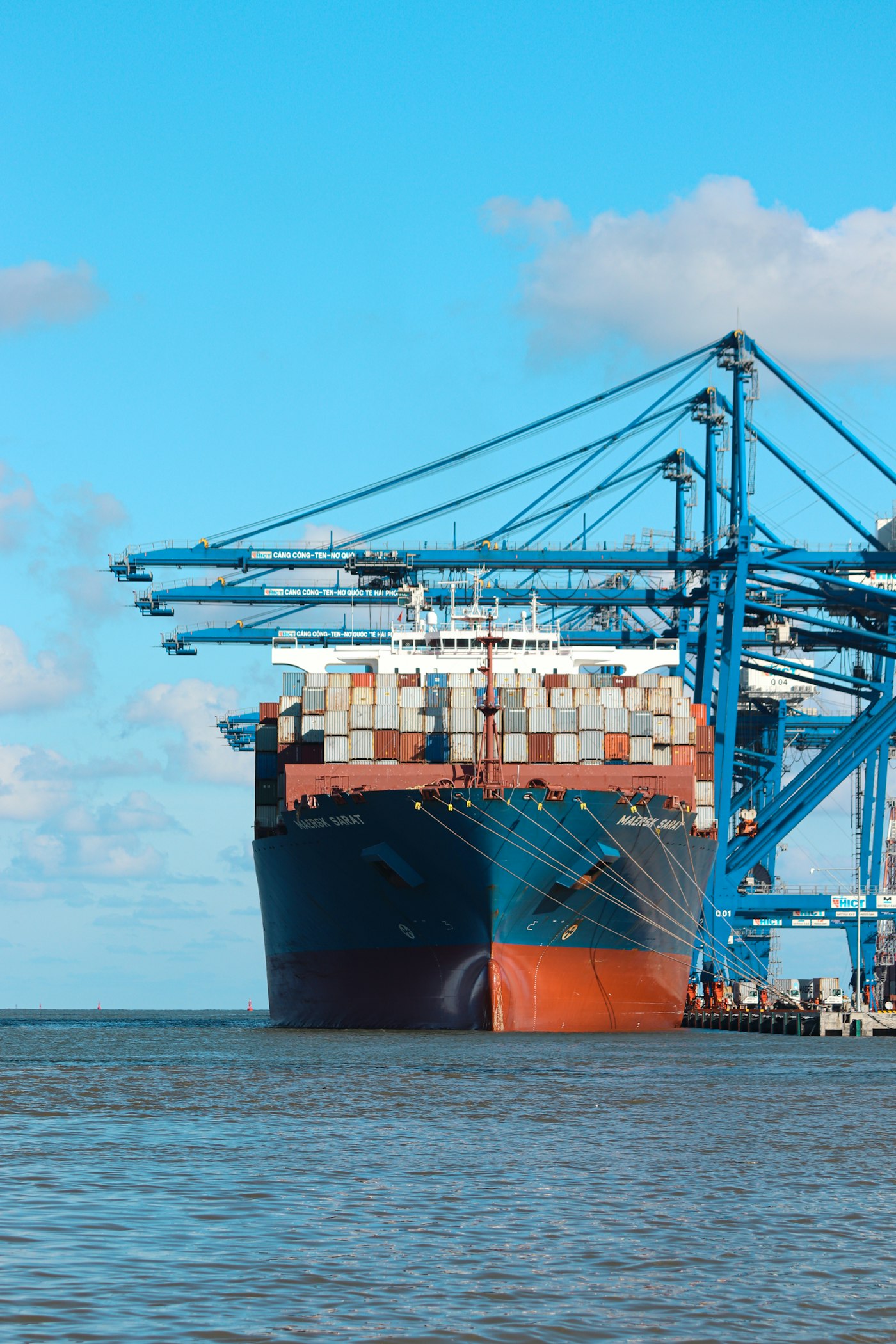
1. Goods arrive and are released. Cargo lands at a port of entry. CBP releases it into the importer's custody, which can happen before the duty has been fully calculated.
2. The entry summary gets filed. The importer, usually via a licensed customs broker, files CBP Form 7501, the Entry Summary. This declares what the shipment is, its classification, its country of origin, and its customs value.
3. Duty is deposited. Estimated duties must be deposited within 10 working days of the cargo's release from CBP custody. Not on delivery to the store. Not after the goods sell. Within ten working days of clearing customs.
4. Liability sits with the importer. A broker can prepare and file the form, but the importer of record stays legally responsible for the accuracy of everything on it, including the declared value. Get the classification or valuation wrong and the importer answers for it.
Step 3 is where the cash-flow pressure shows up. A business pays the tariff weeks or months before it earns revenue from the goods. For a company with thin margins or a stretched credit line, that timing can hurt more than the duty itself.
The customs value is the base, not the sticker price
Duty is calculated on the customs value, which is generally the transaction value: what the importer actually paid the foreign seller. Not the retail price, and not the wholesale price the importer will charge later.
This is why tariff percentages sound larger than the price effects that follow.
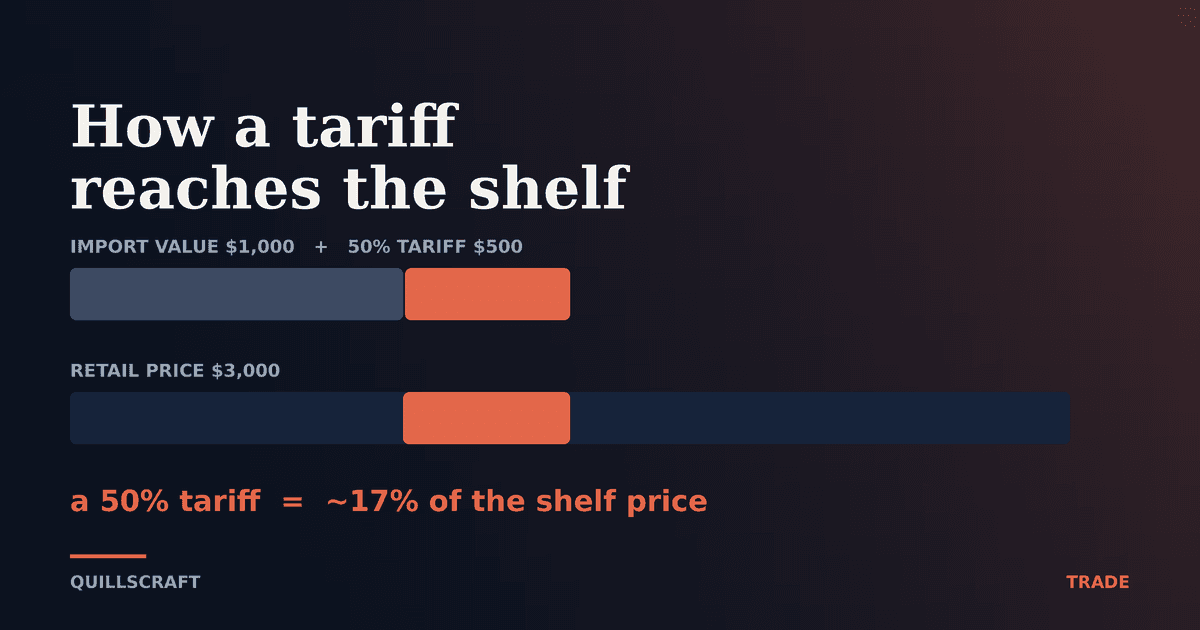
Work through a simplified example. An importer buys a shipment with a customs value of $1,000 and a 50% additional tariff applies:
| | | |---|---| | Customs value | $1,000 | | 50% tariff | $500 | | Importer's landed cost | $1,500 (before freight, fees, other duties) |
Now say that shipment normally retails for $3,000. The added $500 is about 17% of the retail price, not 50%. The tariff is charged against the import value, while the shelf price already includes freight, warehousing, marketing, staff, rent, and margin, none of which the tariff touches.
That is the arithmetic behind a claim that confuses a lot of readers: a 50% tariff producing a single-digit or low-double-digit increase at the till is completely normal, not evidence that someone is absorbing the cost out of goodwill.
What the importer does next
Facing that extra $500, a business has four realistic moves:
Raise the price. Pass some or all of it to customers.
Absorb it. Take a smaller margin to hold market share.
Push back on the supplier. Ask the exporter to lower its price to share the pain.
Switch sourcing. Find a domestic or non-covered supplier.
Which one dominates depends on substitutes. Where alternatives are plentiful and switching is easy, importers push back on suppliers or change source, and consumer prices move relatively little. Where the product is specialised, or one country dominates supply, the importer has little leverage and more of the cost reaches the customer.
Two other outcomes are easy to miss. Some goods simply stop being imported, so the effect shows up as absence rather than price. And products often get quietly reformulated, resized, or downgraded instead of repriced.
Why exemptions matter more than the headline rate
Tariff announcements lead with a single percentage. The orders themselves rarely apply it to everything.
The 2026 Canadian measures are a good illustration. The headline figure was 50%, but energy products, potash, fish, critical minerals, and goods already subject to Section 232 duties were carved out. A shopper reading only the headline would expect every Canadian product to jump. Most did not, because most were never covered.
The practical takeaway: before assuming a product is affected, check whether its specific tariff classification appears in the order. The full detail sits in our coverage of the 2026 Trump Canada tariffs.
Frequently asked questions
Who pays a tariff, the exporting country or the importer?
The importer of record, which is almost always a US company. It pays US Customs and Border Protection. The exporting government pays nothing.
When is the tariff actually paid?
Estimated duties must be deposited within 10 working days of the cargo being released from CBP custody, filed on CBP Form 7501.
Does a 50% tariff mean a 50% price increase?
Almost never. Duty is calculated on the customs value, which is far lower than the retail price. Retail already includes freight, warehousing, staffing, and margin, and none of those are tariffed.
Can the foreign supplier end up paying part of it?
Yes, indirectly. Importers frequently negotiate lower prices from suppliers to share the cost. How much shifts depends on who has alternatives.
What happens if the paperwork is wrong?
The importer of record carries the liability, even when a customs broker filed on its behalf. Misclassification or undervaluation can bring penalties.
Bottom line
A tariff is a tax an American company pays to its own government, on the import value, within ten working days of clearing customs.
Everything that happens afterwards, whether the price rises, the margin shrinks, the supplier discounts, or the product quietly disappears, is a commercial decision made downstream of that payment. Once the mechanics are clear, most of the confident claims about who is paying turn out to be describing something else entirely.


