
"Which branch is easiest to join?" usually means one of two very different things. Either you are worried you will not qualify, or you want the path of least resistance into a uniform. The answer changes depending on which one you are.
And there is a catch worth saying up front: the branch that is easiest to get into is not the branch that is easiest to be in.
The short version
Easiest to get into: the Army. It is the largest branch, recruits the most people, has the lowest entry standards, and grants the most waivers.
Hardest to get into: the Coast Guard, by a wide margin. It is tiny, takes few people, and can afford to be selective.
Easiest day-to-day life: the Air Force, consistently — better housing, better facilities, better working conditions.
Hardest day-to-day life: the Marine Corps, deliberately so.
Why the Army is the easiest to join
It comes down to arithmetic. The Army is the largest branch and therefore has the largest annual recruiting target. When you need to bring in far more people than anyone else, you cannot be as selective as a branch that needs a fraction of that number.
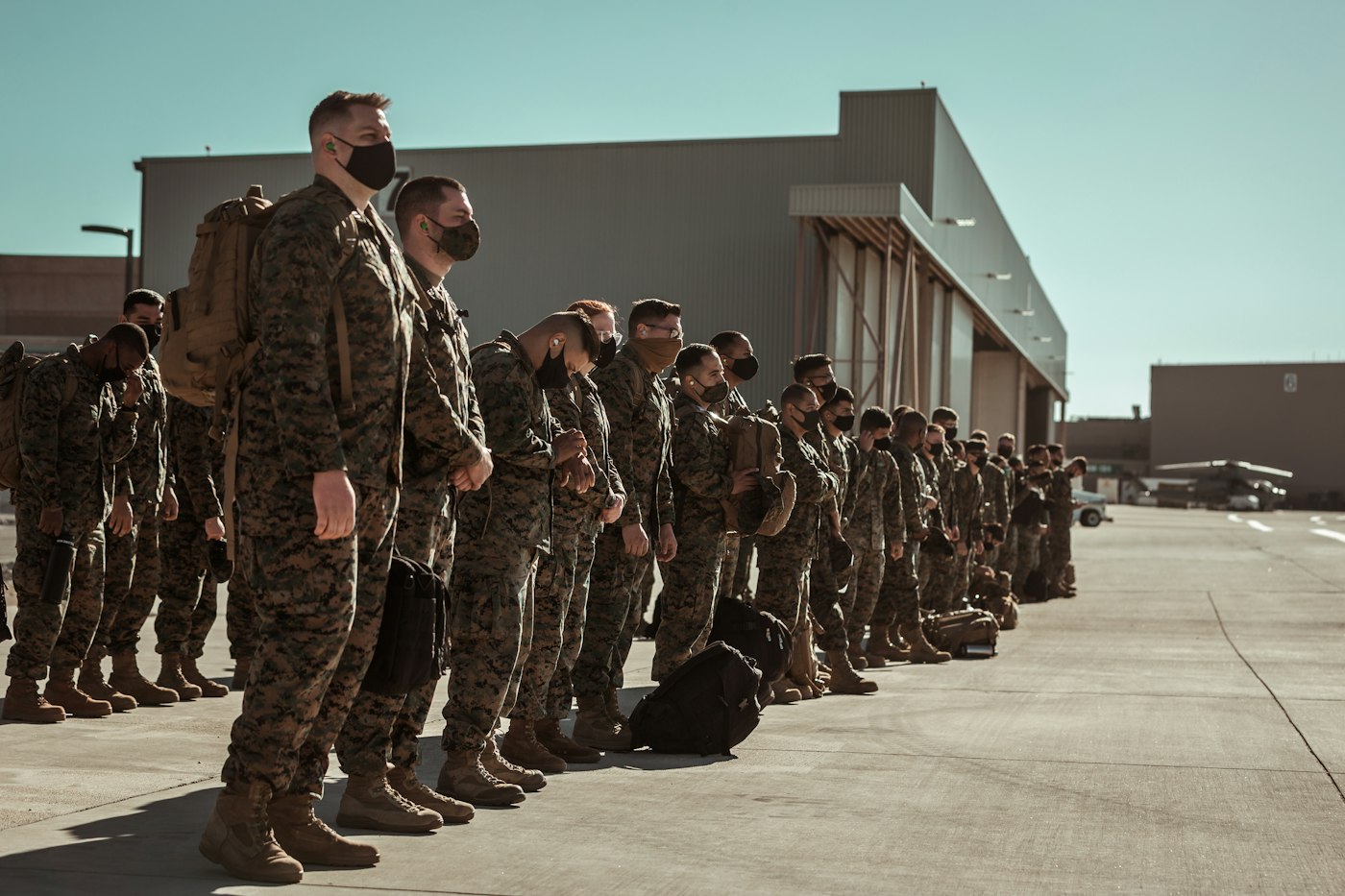
That shows up in three practical ways:
Lower minimum test scores. The Army's ASVAB floor is the lowest or joint-lowest of the branches.
More waivers. Medical conditions, past legal issues and tattoo policies that would stop you elsewhere are more often waived here — not automatically, but the door is open more often.
More jobs. A larger branch has more roles to fill, so there is more chance something matches your scores.
The Army also runs programs for applicants who narrowly miss academic or fitness standards, giving them a route in rather than a rejection. No other branch invests in that at the same scale.
Why the Coast Guard is the hardest
The Coast Guard is by far the smallest branch — a fraction of the Army's size. A small branch with steady interest can simply choose the strongest applicants. It carries the highest minimum ASVAB requirement, grants the fewest waivers, and applicants routinely sit in a delayed entry pool for months waiting for a slot.
If your application has anything on it that needs explaining, the Coast Guard is the least forgiving place to try.
Roughly where the branches sit
From most to least accessible for a typical applicant:
Army — lowest standards, most waivers, most slots
Navy — large, plenty of technical roles, moderate standards
Marine Corps — entry paperwork is not the obstacle; the physical standard is
Air Force — competitive, because a lot of people want in
Space Force — extremely small, extremely selective, very few slots
Coast Guard — hardest, and it is not close
The Marine Corps deserves a note. Its paperwork requirements are not unusually strict, so on that measure it is not hard to join. What is hard is boot camp — the longest and most demanding of any branch, with a genuine attrition rate. Getting accepted and getting through are different problems.
Which military branch is best?
There is no single answer, but the branches have well-established reputations that hold up:
Air Force — quality of life
Better dorms, better bases, better gyms and dining facilities, and working conditions closer to a technical job than a field one. It also transfers to civilian work well, particularly in IT, aviation maintenance, medical and cyber. If you are thinking about what happens after service, this matters.
Navy — travel and technical training
The nuclear, electronics and IT ratings are among the strongest technical training available anywhere, and they convert into civilian pay directly. The cost is deployment: long stretches at sea, away from home, with limited contact.
Army — opportunity and variety
The widest range of jobs, the most bases, the most locations, and the most chance of finding a role that fits. Being the largest branch means the most doors, but also the most bureaucracy.
Marine Corps — identity
People join the Marines for what it means rather than what it pays. The training is the hardest, the standards are the strictest, and the culture is the strongest. Technical training and quality of life are generally weaker than the Air Force or Navy.
Coast Guard — home and mission
Mostly domestic, with search and rescue and law enforcement work. Far more time in the United States and a mission many find more immediately meaningful. The problem is simply getting in.
Space Force — new and narrow
Small, technical, and almost entirely focused on space operations, cyber and intelligence. Very few positions, very high standards, and not much history to judge it by yet.
Match the branch to what you actually want
You just want in, and your record is not perfect → Army

Photo: Scandinavian Backlash / Unsplash You want the best living and working conditions → Air Force
You want technical skills that pay well afterwards → Navy or Air Force
You want to see other countries → Navy
You want to stay in the United States → Coast Guard
You want to be tested as hard as possible → Marine Corps
You have strong technical scores and patience → Space Force
Easy to join is the wrong thing to optimise for
This is worth being blunt about. The branch is a four-to-six year decision, and picking it because the entry paperwork was simplest is a poor reason to spend those years somewhere.
The choice that shapes your life far more is the job, not the branch. A cook in the Air Force and a cyber operator in the Air Force have almost nothing in common. Your ASVAB scores decide which jobs you can pick, so the useful move is to study for the ASVAB and open more doors, rather than to go looking for the branch with the lowest bar.
If you are still deciding whether to enlist at all, we covered that separately in the pros and cons of joining the military and whether four years in the military is worth it.
Frequently asked questions
What is the easiest military branch to join?
The Army. It has the lowest entry standards, grants the most waivers, and recruits the most people, so it has the most room to accept applicants other branches would turn away.
What is the hardest branch to get into?
The Coast Guard. It is the smallest branch, has the highest minimum ASVAB requirement, and gives out the fewest waivers.
Which branch has the best quality of life?
The Air Force, consistently — housing, facilities and working conditions are generally better than the other branches.
Which branch is hardest to get through?
The Marine Corps. Its recruit training is the longest and most physically demanding, so it is easier to be accepted than to graduate.
Which branch pays the most?
Base pay is identical across all branches for the same rank and years of service — it is set by federal pay tables. What differs is bonuses, allowances by location, and how well your training pays afterwards.
Does an easier branch mean an easier career?
No. Entry standards and daily life are unrelated. The Marines are relatively easy to be accepted into and the hardest to serve in.
The bottom line
If your only question is where you are most likely to be accepted, the answer is the Army, and the Coast Guard is where you are least likely.
But if you are choosing a branch for the next four to six years of your life, pick it on quality of life, the training you will get, and how that training pays once you are out. Study for the ASVAB and the question of which branch will take you mostly stops mattering — because most of them will.


