
Why are gas prices rising? How the Iran war is affecting US drivers
American drivers are feeling another sharp change at the pump. The national average gasoline price reached $4.091 per gallon on July 23, 2026, according to AAA (https://gasprices.aaa.com/). That was nearly 15 cents higher than one week earlier and about 94 cents above the average from a year ago.
So, why are gas prices rising again? Renewed fighting between the United States and Iran has disrupted oil shipments through the Strait of Hormuz. Higher crude oil prices are now working their way through refineries, fuel terminals, and gas stations across the country.
Why are gas prices rising so quickly?
Crude oil is the largest and most volatile part of the retail gasoline price. When crude becomes more expensive, the cost of producing gasoline usually follows.
Brent crude, the international oil benchmark, closed at $105.32 a barrel on July 23, the highest price of that month. It had traded as low as $68.53 on July 2. That rapid increase came after a temporary diplomatic agreement weakened and fighting intensified around major shipping routes.
The current rise is not caused by the war alone. Summer demand, regional refinery conditions, transportation expenses, and state taxes also affect what drivers pay. Still, the oil disruption is the main reason US gas prices today are moving higher.
On July 23, 2026, the national average price of regular gasoline was $4.091 per gallon. That was up from $3.943 one week earlier and $3.926 one month earlier. A year earlier, regular gasoline averaged $3.155 per gallon.
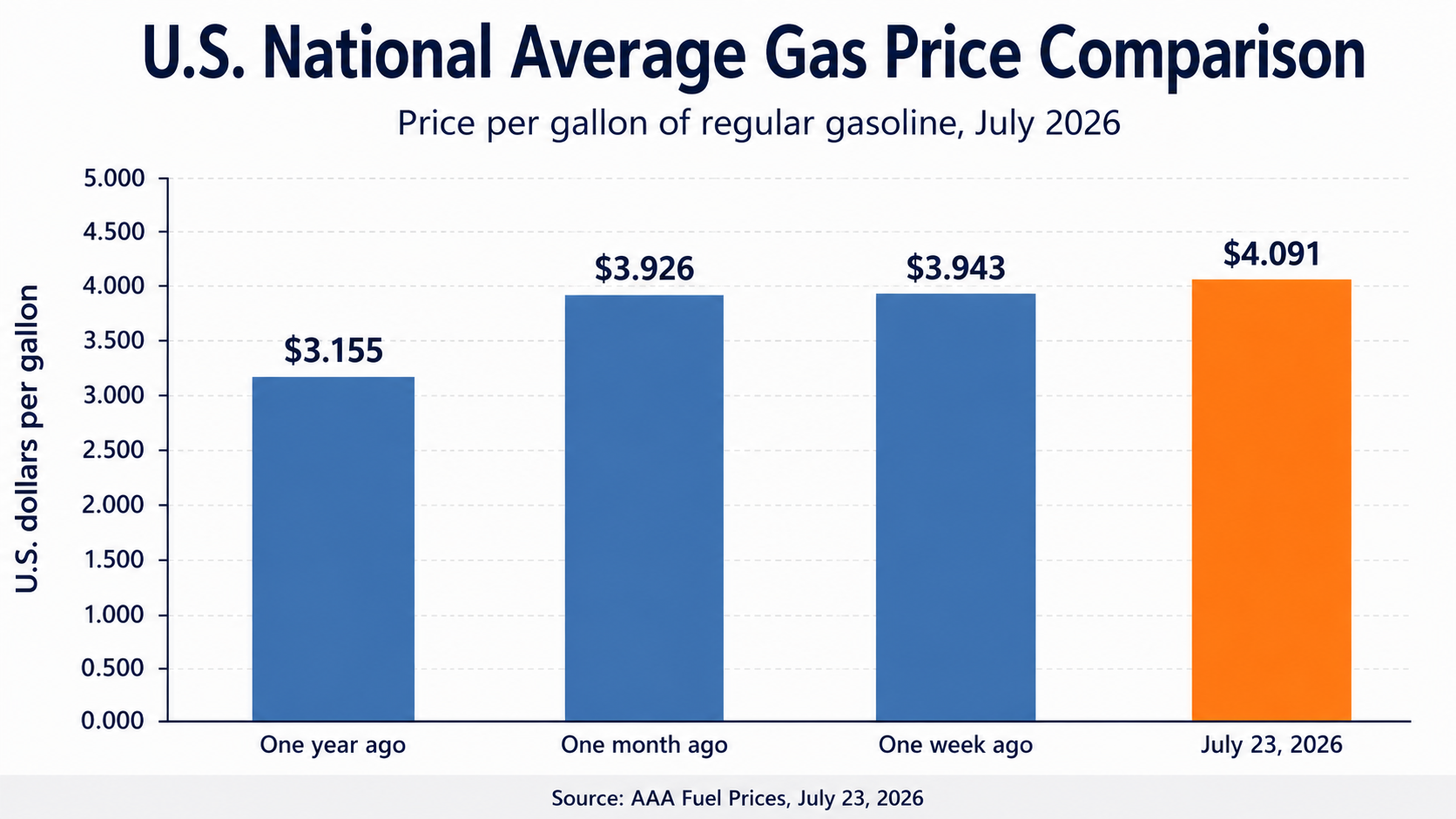
The current price remains below AAA's record national average of $5.016, reached in June 2022.
How the Strait of Hormuz disruption affects oil prices
The Strait of Hormuz connects the Persian Gulf with the Gulf of Oman. Before the current conflict, about 20 million barrels of oil and petroleum products moved through this narrow passage each day.
Data from the U.S. Energy Information Administration (https://www.eia.gov/outlooks/steo/report/energysecurity/article.php) show that oil flows through Hormuz fell from an estimated 20.7 million barrels per day in late 2025 to 14.6 million during the first quarter of 2026. The agency warns that recent ship-tracking data are unreliable, so that estimate may change.
The situation grew more uncertain on July 23 when Iran-backed Houthi rebels claimed attacks on two Saudi oil tankers in the Red Sea. One tanker was reportedly struck by an unknown projectile, although every detail of the Houthi claim had not been independently confirmed.
This matters because the Red Sea is one alternative route for oil that cannot pass through Hormuz. Threats affecting both routes increase shipping delays, insurance costs, and fears of a crude oil supply shortage.
Why American oil production does not prevent higher prices
The United States produces a large amount of oil, but oil trades in a global market. American producers and refiners buy and sell at prices influenced by international supply and demand.
“Crude oil is traded in a global market.”
U.S. Energy Information Administration (https://www.eia.gov/finance/markets/crudeoil/spot_prices.php)
The EIA has found that U.S. gasoline prices generally move more closely with Brent crude than with West Texas Intermediate, the domestic benchmark. A Middle East supply disruption can therefore raise American fuel prices even when no physical shortage exists at a local gas station.
Pump prices also lag behind crude oil. Refineries often purchase oil in advance, process it, and send the finished fuel through terminals before it reaches a station. Drivers may continue seeing price increases days or weeks after the initial jump in crude.
Will gas prices keep rising?
No one can predict the exact direction with confidence. The answer depends largely on shipping access and the course of the Iran war.
Prices could rise further if:
- Tanker traffic through Hormuz remains restricted.
- Attacks spread to more ships or energy facilities.
- Brent crude stays near or above $100 per barrel.
- Refineries experience outages during heavy summer demand.
Prices could stabilize or decline if a ceasefire restores shipping, stranded oil returns to the market, or producers increase supply through alternative pipelines.
Drivers should watch the price of Brent crude and reports about tanker traffic. Those indicators often move before retail prices do.
Higher fuel costs do not stop at the pump
More expensive gasoline directly affects household driving costs. Higher diesel and jet-fuel prices can also make trucking, deliveries, and air travel more expensive.
The Bureau of Labor Statistics reported that gasoline prices were already 28.4 percent higher in April 2026 than one year earlier. Because businesses use fuel to move food and merchandise, a sustained increase can add pressure to consumer prices.
The effect will differ by location. State taxes, refinery access, fuel requirements, and transportation distances cause some states to pay much more than the national average.
Frequently asked questions
1. Why does gasoline cost more in some states?
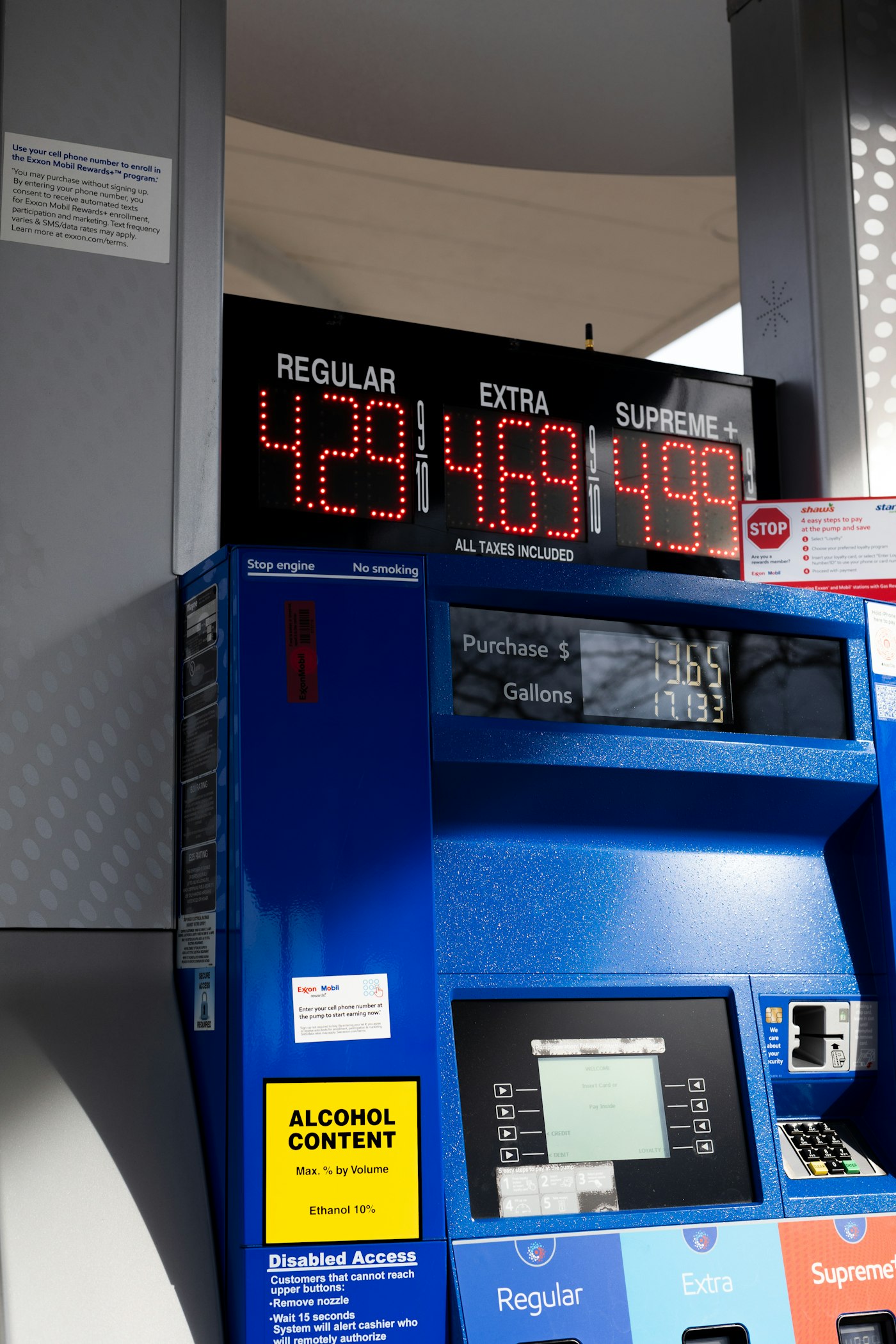
Gasoline prices vary because of state taxes, local fuel rules, refinery capacity, transportation costs, and competition between stations. West Coast states usually have higher prices because of limited refinery connections and specialized fuel requirements.
2. How quickly could gasoline prices fall after a ceasefire?
Crude oil could react immediately to credible peace news, but retail gasoline would probably decline more slowly. Existing fuel must move through the supply chain before lower wholesale costs reach local stations.
Conclusion
Why are gas prices rising? The clearest explanation is that renewed conflict has restricted major oil routes, pushed crude prices higher, and raised the cost of supplying gasoline.
Whether prices keep climbing depends on the Strait of Hormuz, the wider Iran war, and the ability of producers to move oil through safer routes. For American drivers, the next few weeks will matter more than any single day's pump price.


